


White papers
Publications & research

Computer Vision & Research
We document the core concepts that shape our computer vision work, from foundational models to next-generation VLM architectures.
This section sets a scientific baseline before applied research: objectives, terminology, methodology, and operational limits.
VLM
Vision‑Language Model (VLM): an architecture that aligns images and language for description, reasoning, and response.
DNAT
Deep Natural Anonymisation (DNAT): anonymization by synthetic replacement (faces, license plates) instead of blurring. Preserves visual context while protecting identity.
CV Foundations
Computer Vision: visual representations, detection, segmentation, and multi-object tracking for demanding industrial scenarios.
Gaussian
3D scene representation for real-time rendering and reconstruction (3D Gaussian Splatting).
JEPA
Self-supervised architecture that predicts representations in an abstract space rather than reconstructing pixels (Joint Embedding Predictive Architecture, JEPA).
I-JEPA
Image variant of JEPA: predicts representations of image parts from other parts (I-JEPA).
Languages
Section in preparation: annotation grammars, domain vocabulary, and data schemas to standardize research.
Reference publication
A Survey on Computer Vision in the Wild (arXiv)
Tech timeline
Late 2024
ARCY trademark filed
No. 5169845 · registered trademark (INPI 92, electronic filing, 03/08/2025). Expires 03/08/2035. Filing language: French. Nice classes: 9, 35, 38, 41, 42.
April 2025
Photocounter – Core Model
Robust counting and multi-camera calibration in production.
December 2025
Yrys – Core Model
PPE & safety: fine-grained detection and on-site supervision.
February 2026
Blurit.app
SaaS for real-time anonymization and privacy-by-design compliance.
Our blog
.webp)
AI in Space
Computer vision, VLMs, and satellite imagery for Earth observation.
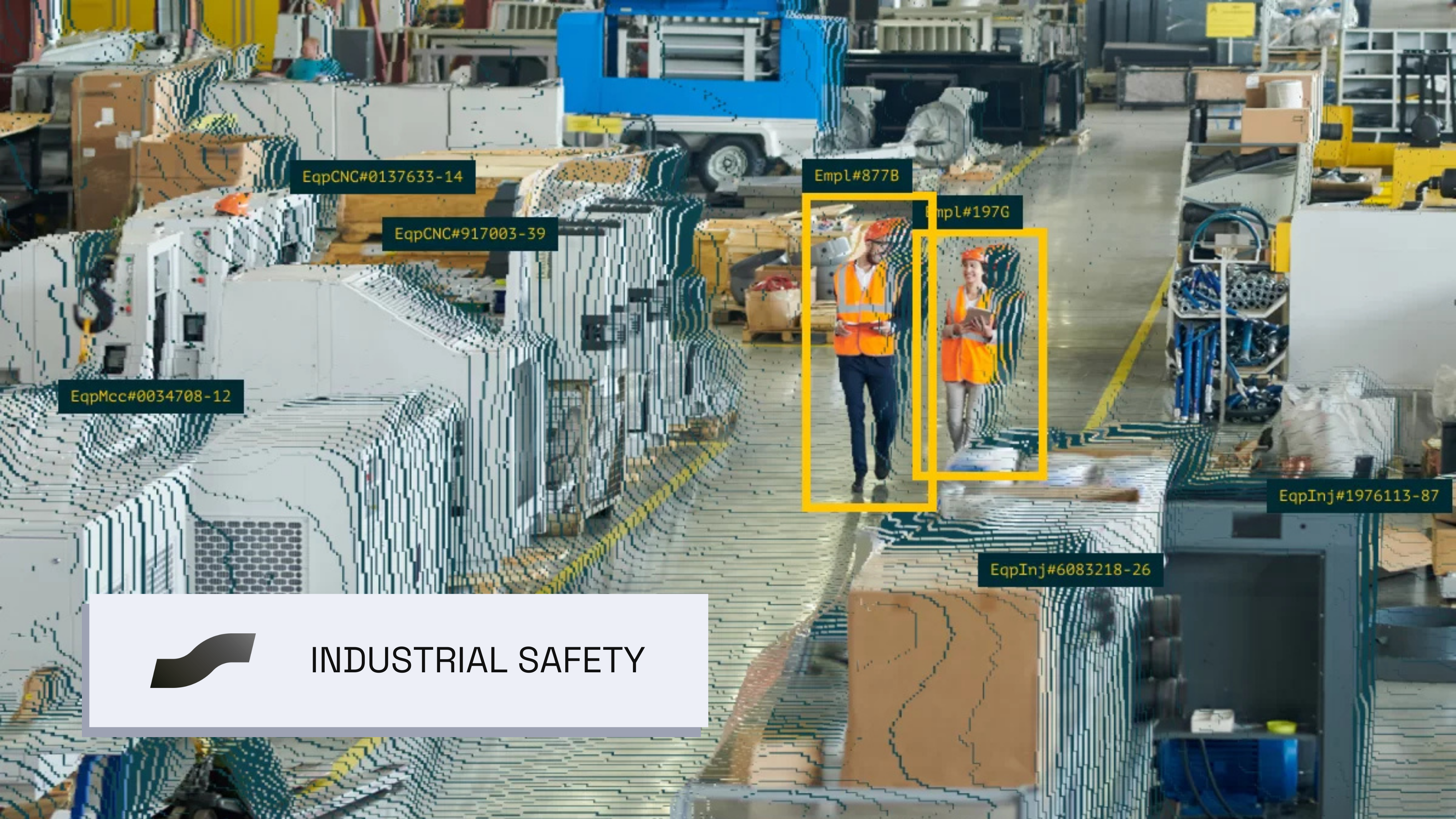
Industrial PPE
Real-time PPE detection and safety compliance monitoring for industrial sites.
Follow us on social media for upcoming publications.
Recognition

Strong partners to industrialize AI.
We collaborate with trusted players to secure performance, safety, and scale.