



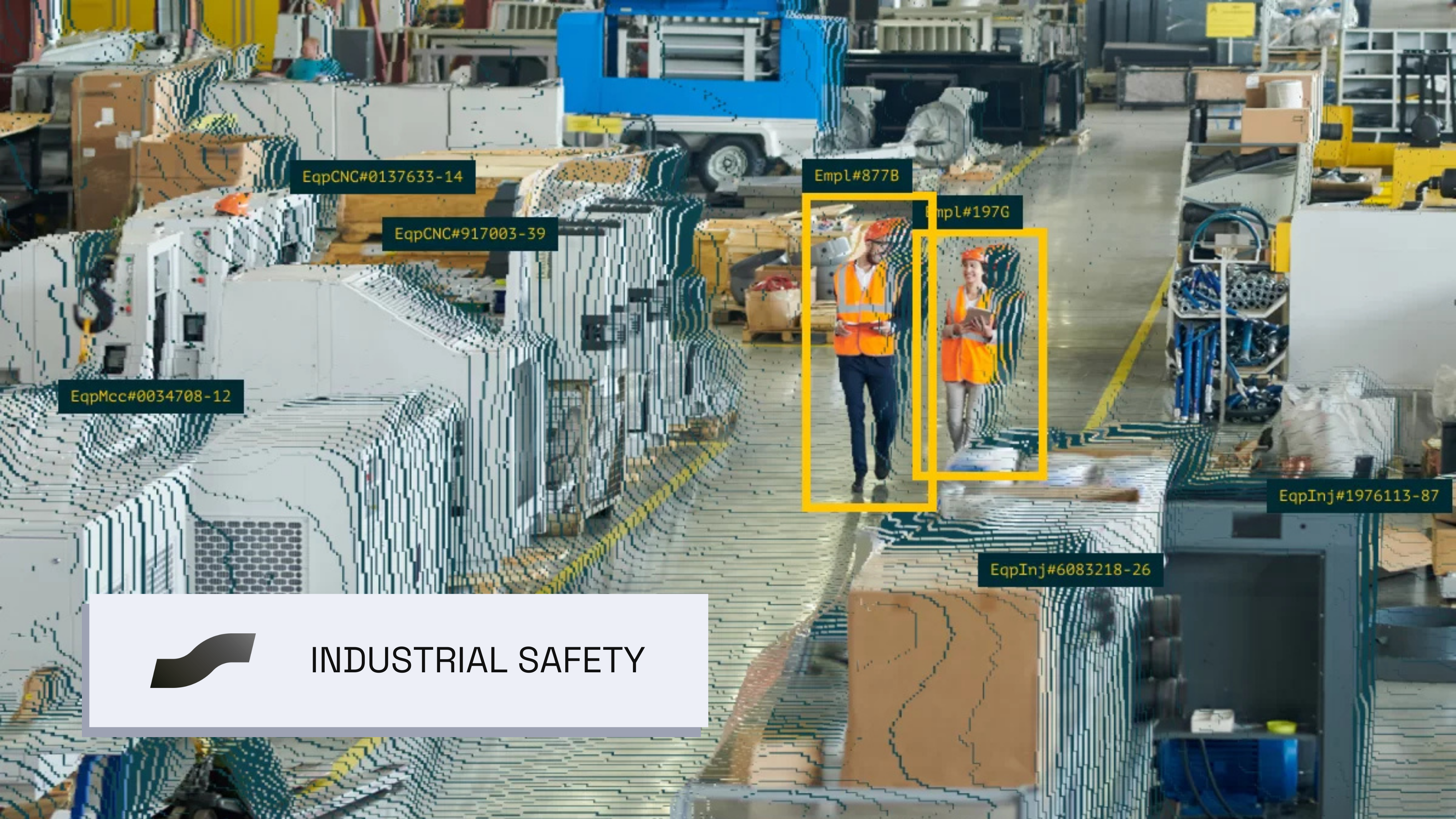
PPE compliance in industrial safety contexts varies across zones, operations, and local HSE procedures. In that context, a spot check is often insufficient: flows are continuous, situations evolve, and the gap between “defined rule” and “applied rule” shows up over time. A real-time approach aims to detect gaps, contextualize risk, and produce actionable outputs for field teams and HSE leaders, without disrupting production. For the audit and continuous-proof angle, see also our PPE compliance between audits guide and the Safety & PPE solution.
Operationally, sites are highly diverse: PPE types, zone-specific tolerances, lighting changes, occlusions, crowd density, and mixed outfits. The challenge is not only recognizing an object, but producing a signal stable enough to be used in an HSE process. That means limiting false positives, avoiding alert fatigue, and linking detected events to explicit compliance rules (zone, time, criticality).
From video signal to qualified incident
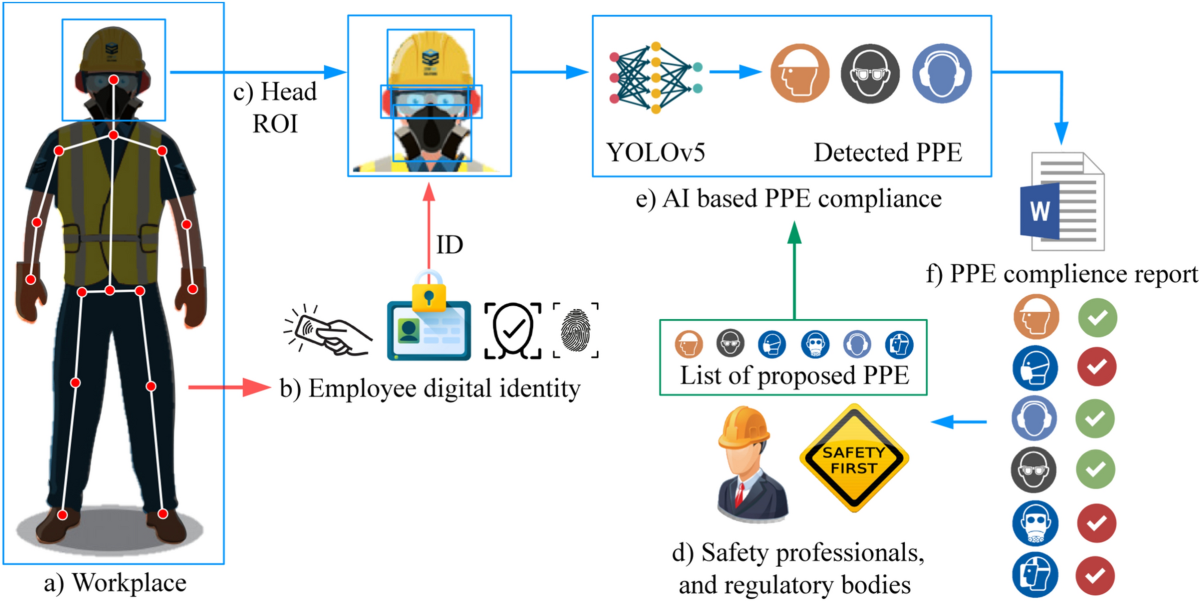
The pipeline relies on a structured perception chain: PPE detection, temporal tracking of people, zone-rule application, then event and report generation. The goal is to turn visual observations into qualified incidents and consolidated indicators usable for reporting and audit.
Parameters (zones, thresholds, escalation rules) can be tuned to reflect site constraints and expected tolerance, producing a stable, actionable, audit-ready signal.
Correct wear vs incorrect wear
Compliance is not just “present / absent”. In critical cases, we distinguish correct wear from incorrect wear (positioning, fastening, partial wear) to avoid counting as compliant PPE that does not protect. Result: fewer ambiguous alerts and a signal closer to real HSE criteria in the field.
Zone rules and proportional alerts
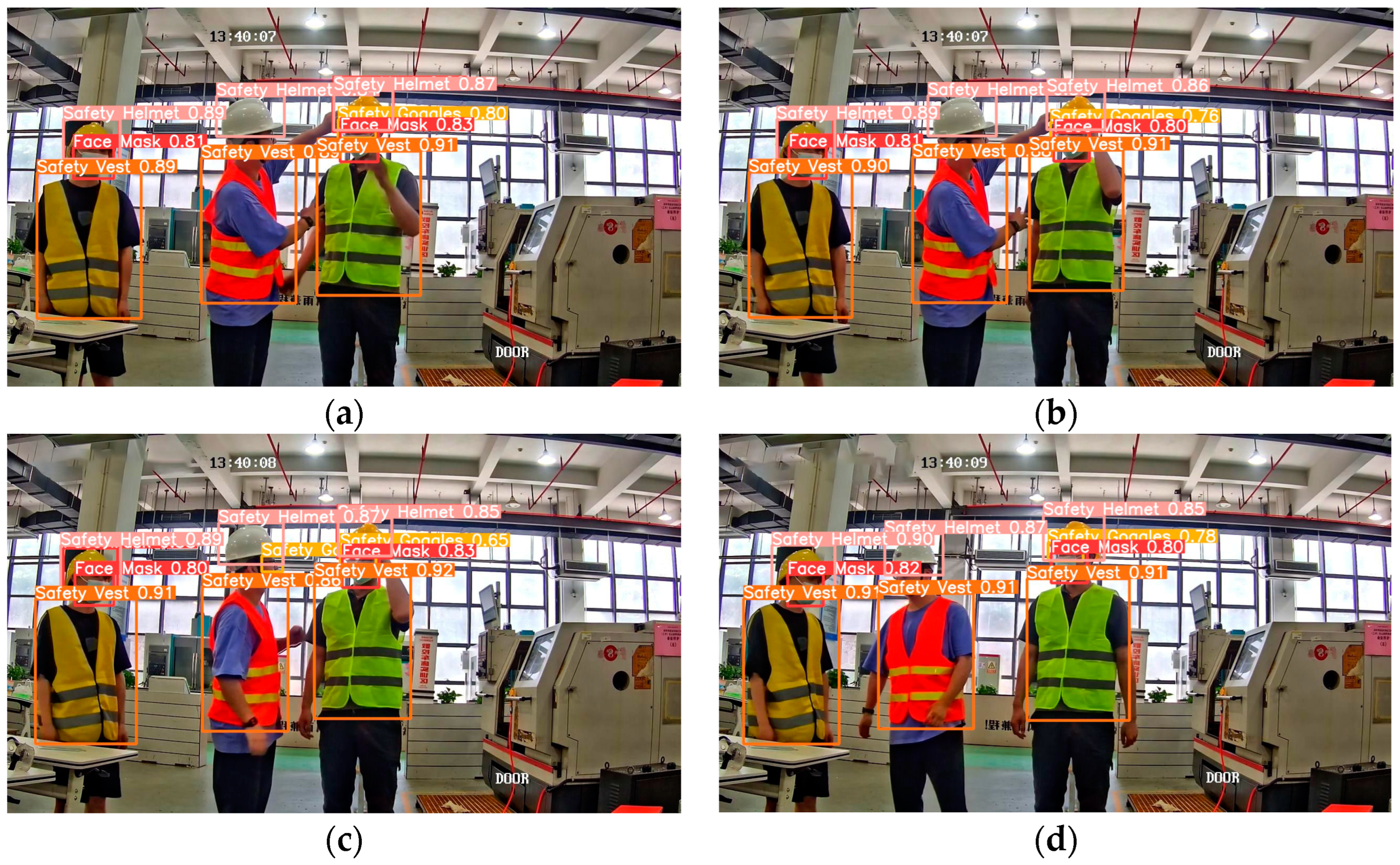
Zone context completes the system. Raw detection without environmental rules tends to produce a hard-to-use signal. Explicit rules (risk zone, required PPE, tolerance duration, confidence threshold) qualify events and enable proportional alerts.
The aim is to protect attention: alerts should be rare, justified, and aligned with existing routines—rather than a constant stream of notifications.
Consolidated supervision and reporting
Supervision relies on consolidated reporting for analysis and continuous improvement. A dashboard groups incidents by zone, period, and PPE type, highlighting trends and recurrence. This links compliance to concrete actions—signage adjustments, targeted reminders, circulation changes, or procedure updates—aiming for measurable, auditable follow-up.
Operational impact
At ARCY, the expected impact is operational: reduce risky situations, make compliance measurable, and provide steering support for safety leaders. A continuous approach also distinguishes isolated deviations from recurring issues, helping prioritize corrective actions.