


.webp)
For a long time, satellite imagery was mostly the domain of agencies and public institutions. Today, Earth observation archives and vision–language models (VLMs) let teams exploit image time series to track events and surface change.
The sector increasingly relies on players such as Liquid AI for efficient, deployable AI models. Environmental and risk use cases also translate into image-analysis workloads with reproducibility requirements close to industrial practice.
Computer Vision from Space: Seeing What Humans Can't
Constellations produce more imagery than experts can read exhaustively. Computer vision segments scenes, detects change, and classifies cover. VLMs add a text layer for existing workflows without replacing domain checks.
Context: Earth Observation in the VLM Era
Data access (Sentinel, Planet, Earth Engine, commercial or institutional portals) is routine. The hard part is downstream: harmonisation, clouds, calibration, and inference on long time series. VLMs improve readability if outputs are validated on reference sets and limits are documented.
The four cases below show recurring method families (change, classification, segmentation, fusion) with traceability and quantitative evaluation.
Among the players driving this convergence, Liquid AI focuses on efficient AI models suited to constrained deployment, while DPhi Space offers orbital servers and software hosting to run payloads in space.
1. Illegal Deforestation Detection
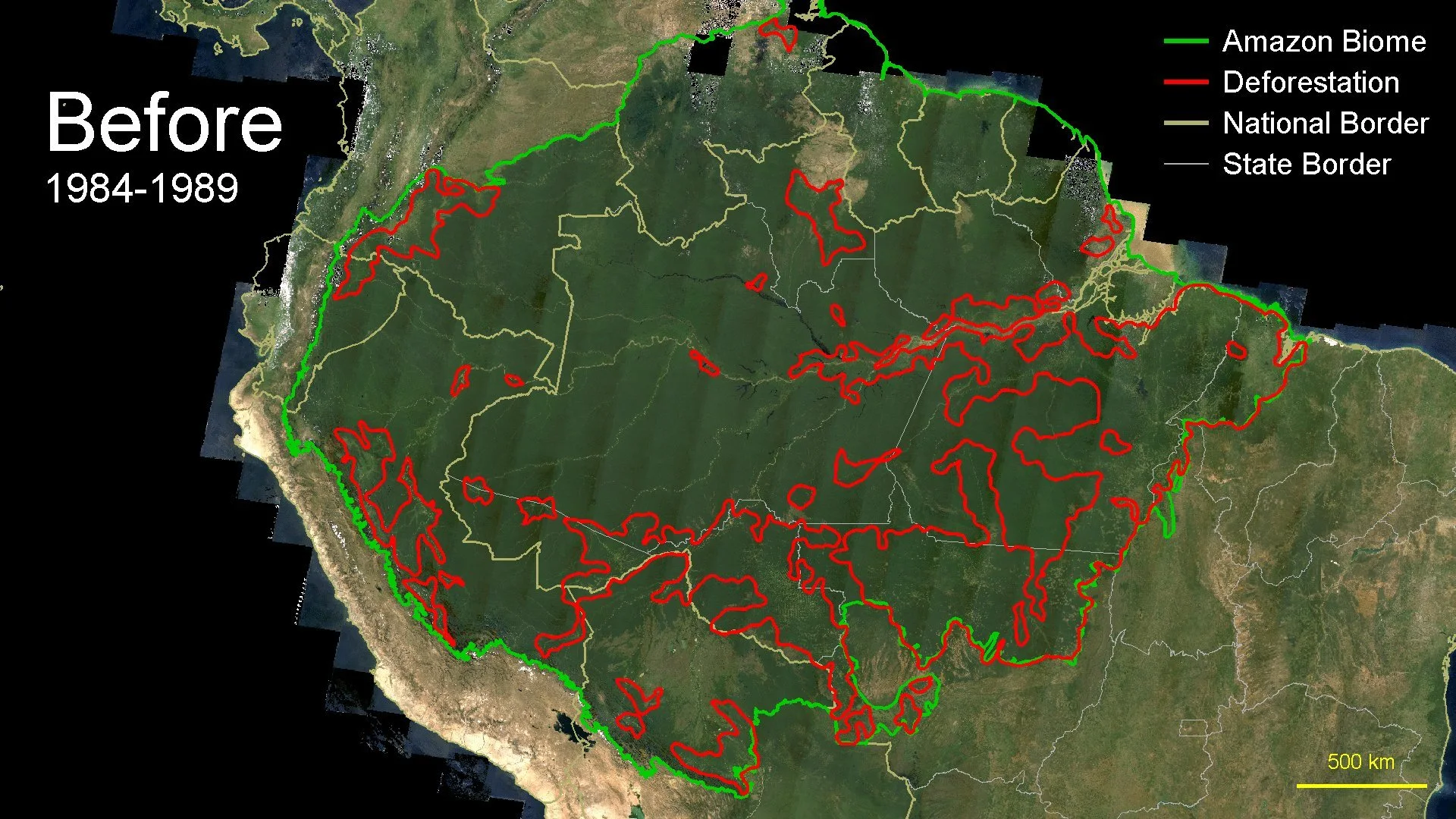
Illegal logging leaves visible traces: roads, clearings, canopy loss outside allowed windows. Orbit yields a timeline over large areas without relying only on ground access.
Paired or stacked images are aligned; departures from expected seasonality are flagged. Multimodal models may suggest interpretations that still need field or expert-label validation.
Change detection plus canopy segmentation is the usual core; VLMs are better as text summaries than as replacements for metrics. The same temporal logic applies to industrial sites or construction zones.
2. Automated Insurance Damage Assessment
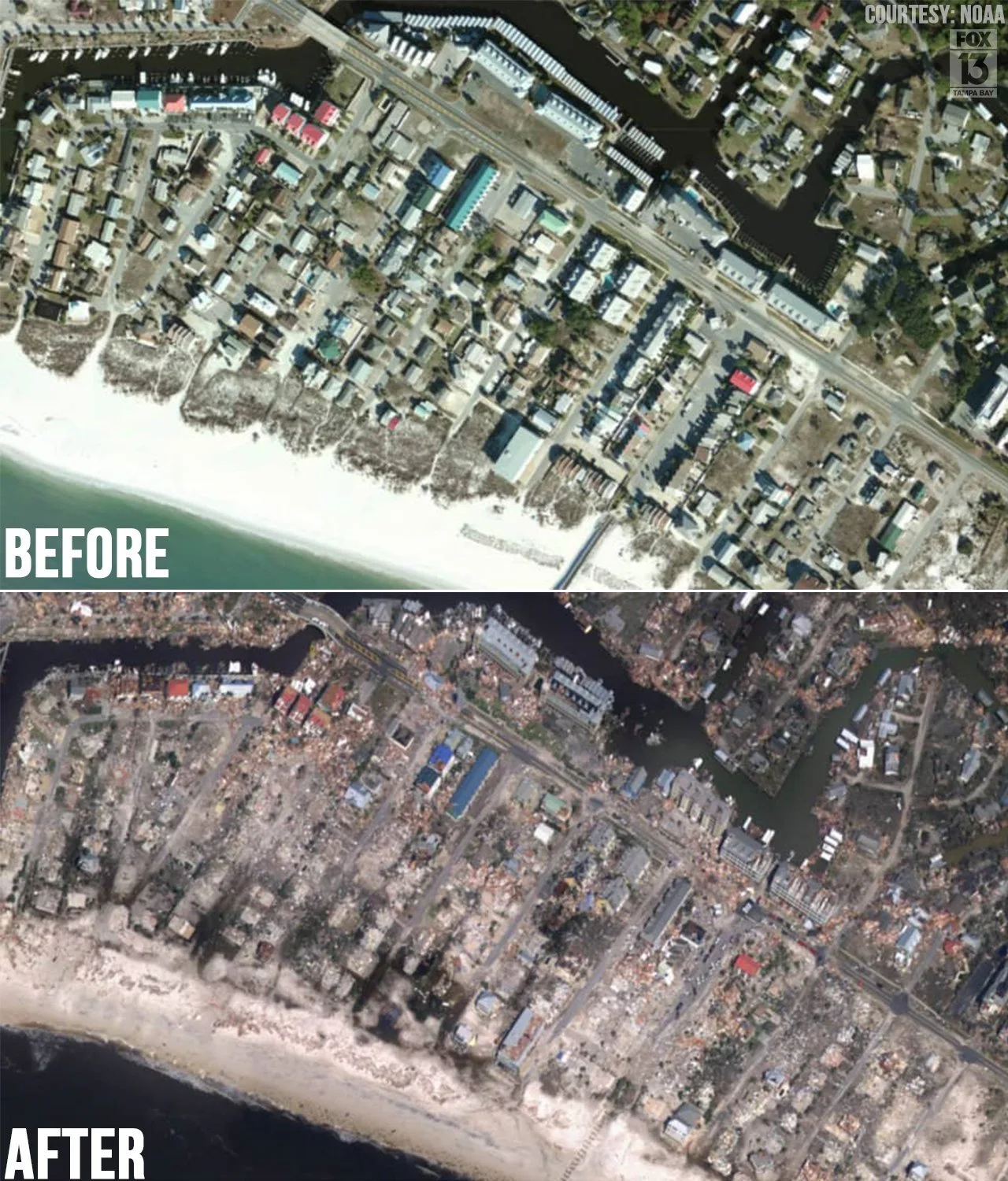
After a major event, prioritising and estimating damage at very large scale quickly exceeds what field surveys alone can deliver, given cost and lead time.
Before-and-after imagery gives an overview. Pipelines co-register scenes, partly mitigate clouds, then assign a state per spatial unit (intact, damaged, destroyed, etc.).
Multi-class classification plus inter-date differences are common; quality depends on training data and validation design. The same reference, deviation, and threshold pattern appears in on-line visual quality control.
3. AI Crop Monitoring
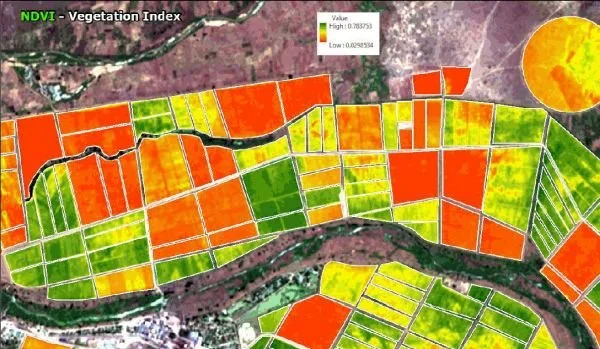
Stress (water, disease, pests) often shows in the spectrum before a single field walk. High-revisit series track vegetation indices over time.
Typical stack: parcel segmentation, atmospheric correction when possible, NDVI or related bands. Multimodal models can summarise in text if alert thresholds stay traceable.
This mirrors industrial process monitoring: gradual drift, thresholds, history-calibrated alerts, here on orbital stacks instead of fixed cameras.
4. Critical Infrastructure Monitoring
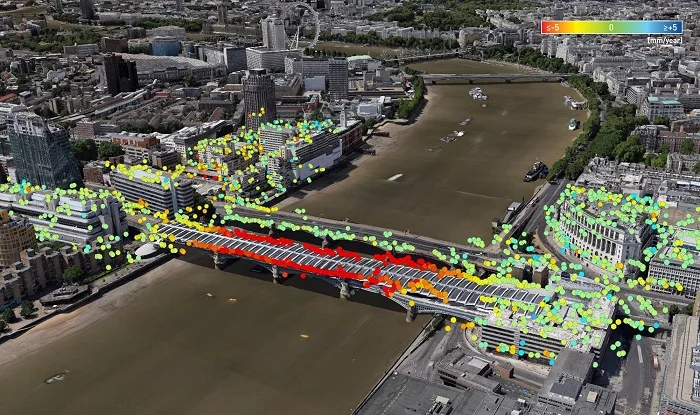
Linear networks span distances where uniform inspection is unrealistic. Geomorphic risk, land use, and undeclared works are often easier to spot with repeat observation.
Pipelines often chain structure detection, change between dates, and segmentation near corridors. Multiple resolutions widen coverage but need stricter validation.
Same idea as on-site cameras: track assets over time, measure deviation from a reference, alert humans only beyond a validated threshold.
Conclusion
The examples cited reflect an open, community-driven dynamic. Mature methods embedded in traceable pipelines support decisions at large scale.
For spatial, industrial, or hybrid computer vision needs, ARCY can help with scoping, prototyping on real data, and controlled deployment.
The same change-detection and segmentation logic applies to industrial quality inspection. On the rapid-prototyping side, our EDTH hackathon write-up shows how these pipelines get validated under real conditions.
Sources
Visual examples and social feed: @paulabartabajo_ (X).